A balanced savory breakfast plate is one of the best ways to start your day with sustained energy and stable blood sugar. While sweet breakfasts like pastries and sugary cereals are common, savory breakfasts provide a better balance of protein, fiber, and healthy fats. Knowing how to build a balanced savory breakfast plate helps you feel full longer, avoid mid-morning crashes, and nourish your body with essential nutrients.
This guide will walk you through exactly how to compose a healthy, satisfying savory breakfast using simple ingredients you likely already have in your kitchen. Whether you’re preparing breakfast for yourself or your family, a well-built savory breakfast plate can be delicious, visually appealing, and nutritionally complete.

Why You’ll Love a Balanced Savory Breakfast Plate
A balanced savory breakfast plate is not only nutritious but also incredibly versatile. You can mix and match ingredients based on your preferences, dietary needs, or what’s in season. Unlike sugary breakfasts that spike blood sugar, savory breakfasts support steady energy and better concentration throughout the morning.
Benefits of a balanced savory breakfast plate include:
-
Long-lasting fullness thanks to protein and fiber
-
Improved focus and productivity
-
Better blood sugar control
-
Easy customization for weight management
-
Endless flavor combinations
Ingredients for a Balanced Savory Breakfast Plate
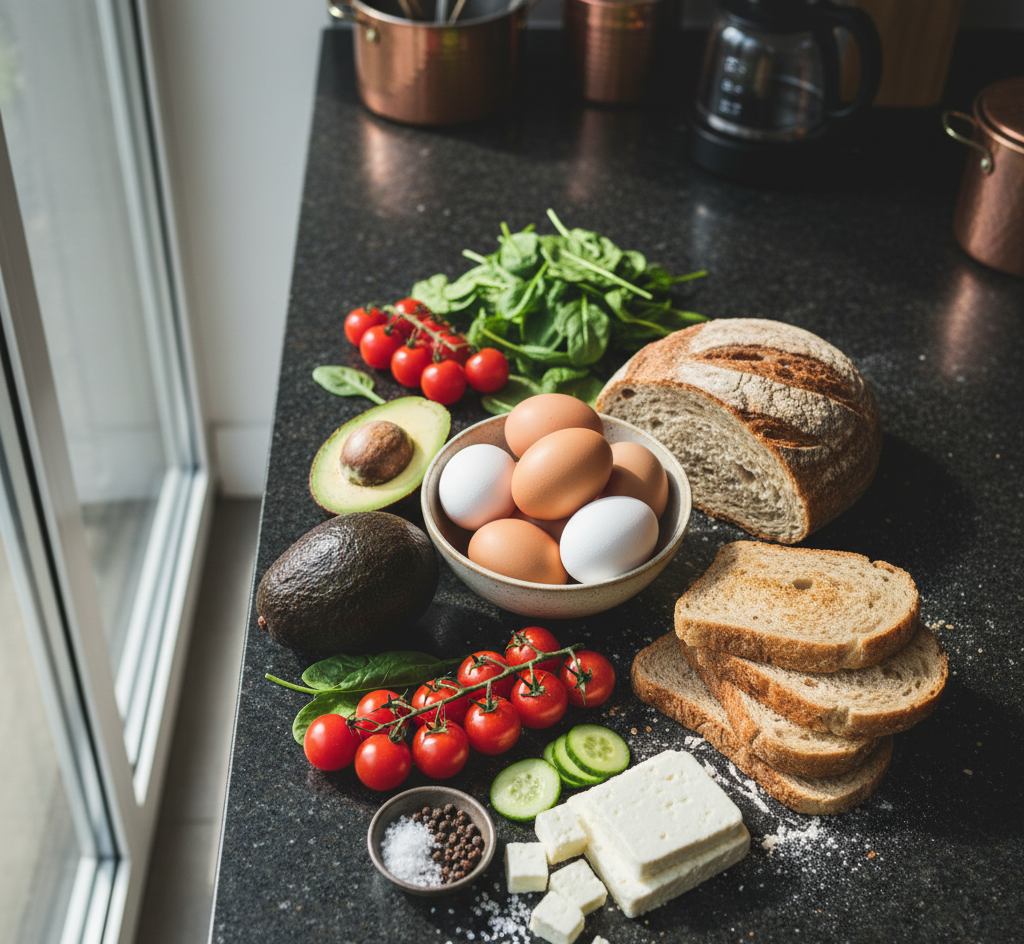
To create a balanced savory breakfast plate, think in food groups rather than strict recipes. Your plate should include a source of protein, whole grains or complex carbs, healthy fats, and colorful vegetables or fruit.
Basic ingredient categories include:
-
Protein: eggs, Greek yogurt, cottage cheese, turkey, smoked salmon, tofu
-
Whole grains: whole-grain bread, oats, quinoa, brown rice
-
Healthy fats: avocado, olive oil, nuts, seeds
-
Vegetables: tomatoes, spinach, cucumbers, bell peppers
-
Extras: cheese, hummus, herbs, olives
Ingredient Notes
Protein is the anchor of a balanced savory breakfast plate because it keeps you full and supports muscle health. Whole grains provide slow-digesting carbohydrates that fuel your brain and body. Healthy fats add flavor and help absorb fat-soluble vitamins. Vegetables bring fiber, antioxidants, and color to the plate, making your breakfast both nutritious and visually appealing.
Choosing fresh, minimally processed ingredients makes a big difference. For example, swap white bread for whole-grain toast or replace processed meats with eggs or grilled chicken for a healthier option.
Step-by-Step Instructions to Build Your Plate
Building a balanced savory breakfast plate is simple when you follow a few steps:
-
Start with a protein base such as scrambled eggs or Greek yogurt.
-
Add one serving of whole grains like toast or quinoa.
-
Include at least two types of vegetables for fiber and vitamins.
-
Finish with healthy fats like avocado slices or olive oil drizzle.
-
Season lightly with herbs, salt, and pepper for flavor.

Tips for Perfect Results
To make your balanced savory breakfast plate both healthy and delicious, keep portions in mind. Avoid overcrowding the plate with too many starchy foods. Aim for half the plate to be vegetables, one quarter protein, and one quarter whole grains.
Helpful tips include:
-
Prep vegetables the night before to save time
-
Use herbs instead of heavy sauces
-
Choose lean proteins
-
Drink water or herbal tea instead of sugary drinks
Variations
A balanced savory breakfast plate can be adapted to many styles and cuisines. Mediterranean versions may include feta, olives, and tomatoes. A Mexican-inspired plate could feature black beans, avocado, and eggs with salsa. Vegetarian plates can rely on tofu, beans, and seeds for protein.
-

-
Leave a Reply